American foul brood is the most serious disease of honeybee brood. It kills sealed larvae and pupae, and the spores it leaves behind can survive for decades.
Those spores are the problem. A single dead larva leaves millions of them in its cell, and they outlast almost anything: drying out, heat, and most disinfectants. They spread in honey, on comb and in old hive parts, so a colony can be infected by something that left another apiary years before. There is no cure that clears the spores from a hive, which is why AFB is treated so firmly.
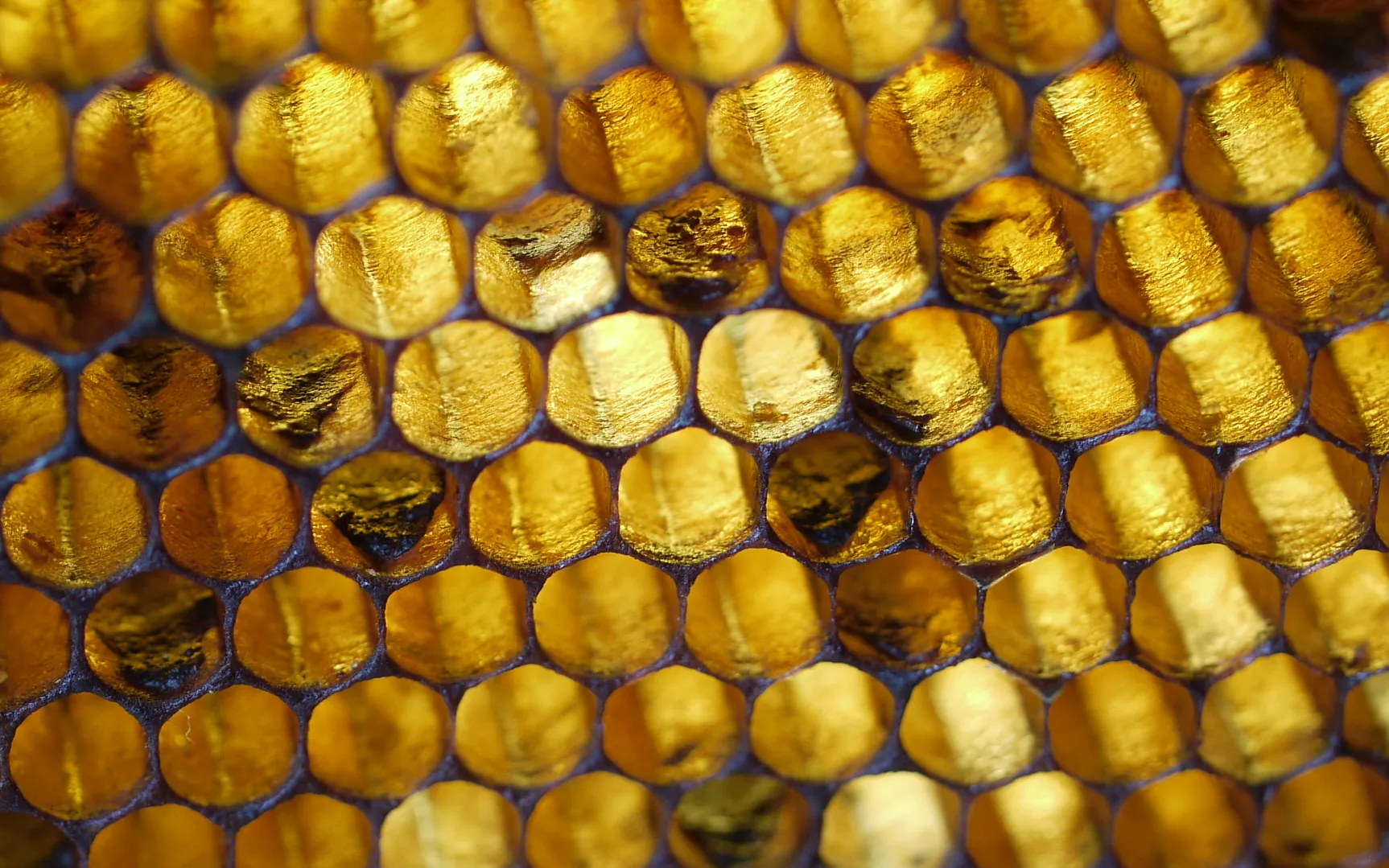

Signs in the brood
What American foul brood looks like
- Sunken, darkened cappings
- Cappings over dead brood sink inwards, go dark and greasy-looking, and are often pierced with small, ragged holes where the bees have started to uncap them.
- Patchy brood
- Healthy capped brood interrupted by open, empty and sunken cells: the “pepper-pot” look.
- Brown, sticky remains
- Inside a sunken cell, the larva or pupa has melted into a coffee-brown, glue-like mass. This is what the matchstick test checks.
- Scales stuck fast
- In time the remains dry into a dark scale, flat along the lower wall of the cell, which the bees can’t remove. Occasionally a dried pupa’s tongue sticks up from it.
A field check
The matchstick test
Beekeepers have used this simple test for a century. It isn’t a diagnosis, only a laboratory can confirm AFB, but a ropy result means you should report it straight away.
Find a suspect cell
Choose a capped cell that is sunken, dark or pierced.
Push in a matchstick
Use a matchstick or a twig, something you’ll burn afterwards. Stir the contents gently.
Draw it out slowly
Pull the stick back out over about a second, watching what comes with it.
Read the result
If a brown thread stretches out two centimetres or more and then snaps back, that’s a “ropy” result, and a strong sign of AFB.
AFB or EFB?
Telling the two foul broods apart
The two diseases can look alike, and a colony can have both. Report either; the inspector will confirm which.
| American foul brood | European foul brood | |
|---|---|---|
| Caused by | Paenibacillus larvae, a bacterium that forms spores | Melissococcus plutonius, a bacterium |
| Brood affected | Larvae and pupae, after the cell is capped | Young larvae, before the cell is capped |
| Cappings | Sunken, dark, greasy, often pierced | Mostly normal; the dead larvae are in open cells |
| Dead larvae | Melt to a coffee-brown, sticky mass | Twisted, yellow to brown, melted-looking |
| Matchstick test | Ropy: a brown thread of 2 cm or more | Usually not ropy, or only slightly |
| Dried scale | Stuck fast to the cell wall | Rubbery, lifts out easily |
| Smell | Can smell like old glue | Sour |
| Spores survive | For decades, in comb, honey and hive parts | No long-lived spores |
| Notifiable in Ireland | Yes | Yes |
What happens next
Hard, but necessary
An inspector will examine the colony and send a sample for testing. If AFB is confirmed, the infected colony is destroyed: the bees are killed, and the frames, comb and honey are burned in a pit. Wooden boxes can usually be kept after they’ve been scorched with a blowtorch. Your other colonies, and apiaries nearby, will be checked too.
It is a hard thing to go through. But every colony that’s dealt with quickly protects every other beekeeper’s bees for miles around, and reporting it is the right thing to do.
Keeping it out
Five habits that protect your bees
- Never feed bees honey you’ve bought, or honey from another apiary. Imported honey can carry AFB spores.
- Don’t buy second-hand hives, frames or comb unless you know they’re clean, and scorch wooden boxes before you use them.
- Look at the brood properly at least twice a year, in spring and late summer, specifically for disease.
- Replace old brood comb regularly, so spores don’t build up over the years.
- Buy bees only from a beekeeper you trust, and ideally local, native stock.