On an island, boats were everything. For centuries, Irish boats were built by hand, from whatever the shore and the hedgerow could give, to fish, to trade and to reach the islands.
Each stretch of coast and each river had its own kind of boat, shaped by its waters and its work: the light currach that could ride an Atlantic swell, the sturdy Galway hooker under its red sails, and the flat river boats that netted salmon. The skills to build and handle them were passed down in families, and today a small number of builders and crews are keeping them alive.

Skin and timber
Two ways to build a boat
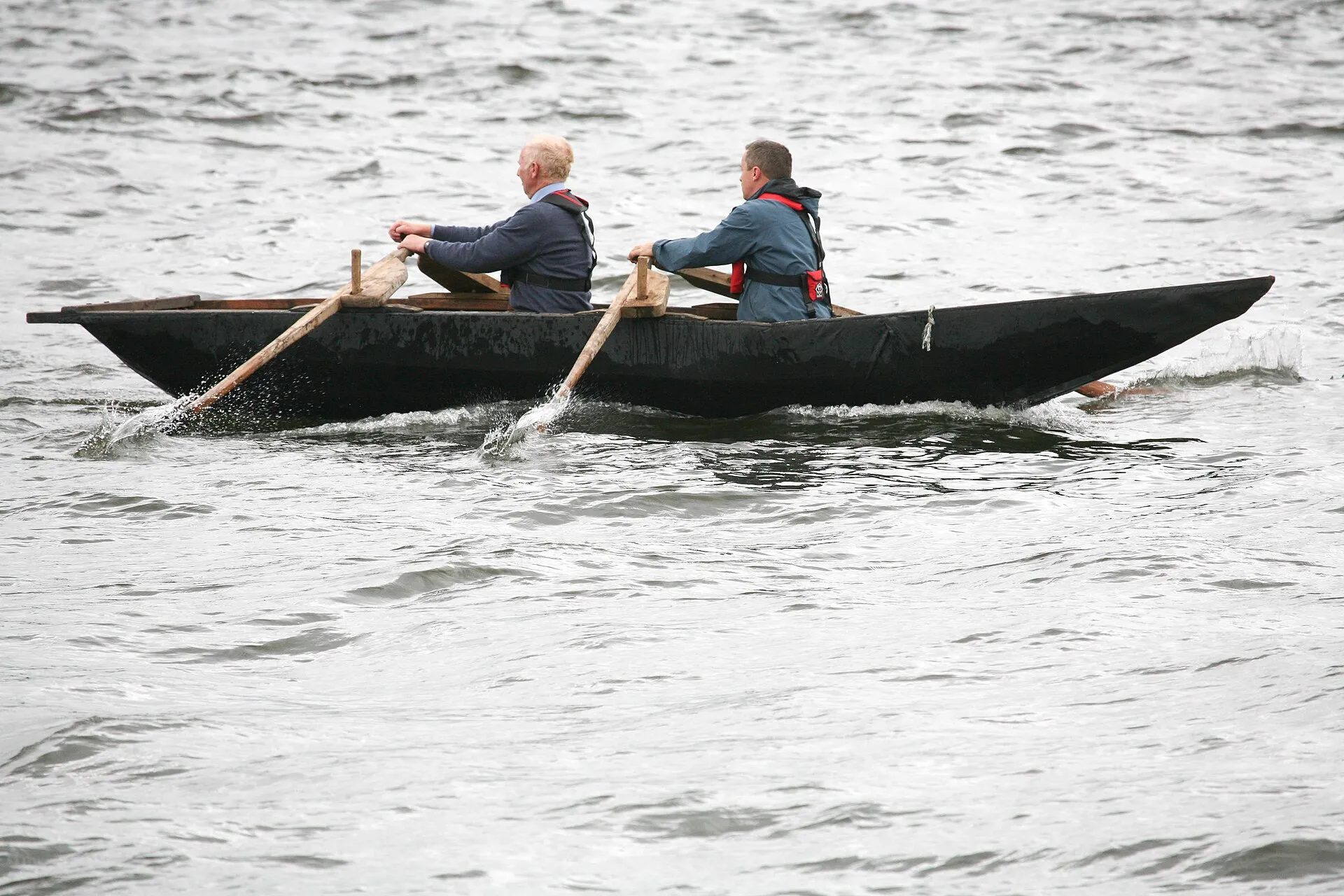

The currach Curach
- Built from
- A light frame of thin laths, once covered in animal hide, now in canvas sealed with tar. No keel.
- Driven by
- Oars, with a small sail on some Aran and Kerry boats.
- Used for
- Fishing, ferrying people and goods, even carrying sheep and cattle out to the islands.
- Best known on
- The west coast, from Donegal to Kerry, where the Kerry version is the naomhóg.
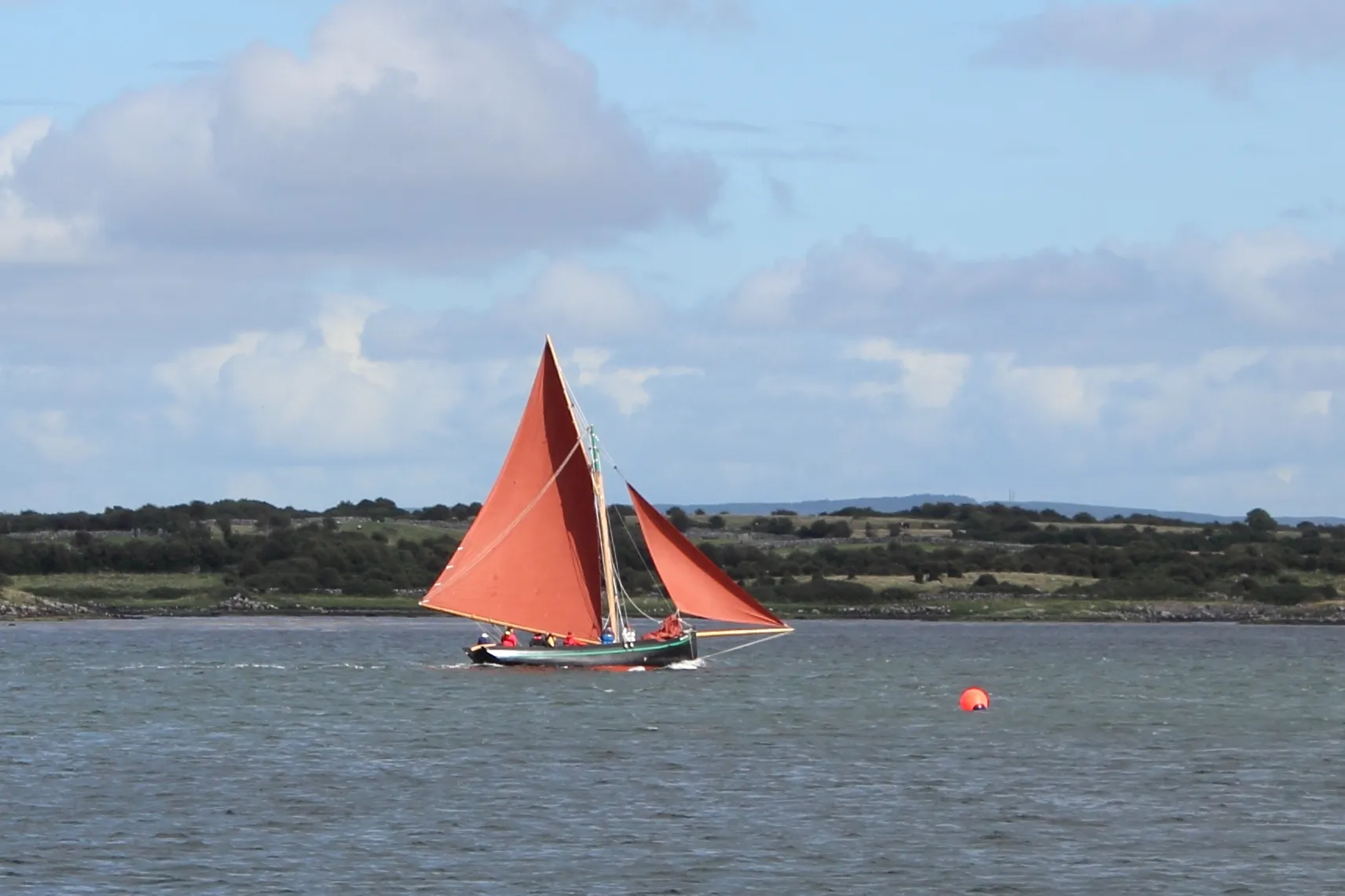
The Galway hooker Húicéir
- Built from
- A heavy timber hull, tarred black, made to handle the strong seas of Galway Bay.
- Driven by
- One mast with a mainsail and two foresails, treated with tree bark until they turned rust-red.
- Used for
- Fishing, and carrying cargo across the bay, above all turf.
- Sizes
- From the big bád mór, up to 13.5 metres, down through the leathbhád and gleoiteog to the open púcán.
The hookers’ trade
Turf out, limestone home
The Aran Islands and the Burren are bare limestone, with little bog to cut for fuel. Connemara has bog in plenty, but sour soil. So the hookers sailed back and forth across the bay, trading what each side lacked.
Westward: turf
Boatloads of cut turf from the Connemara and Mayo bogs, to heat island homes through the winter.
Home: limestone
Limestone to sweeten the acid fields of Connemara and Mayo, so they would grow better crops.
Inland waters
The river boats
The Boyne
The Boyne currach
Round, like a bowl, with a frame of hazel and sally rods covered in ox-hide. Used for netting salmon until the river netting stopped in 1948.
The Shannon
The gandelow
A flat-bottomed boat, used since at least the 1600s for salmon fishing and for cutting reeds. Now rowed and raced again.
The Barrow, Nore and Suir
The cot
Slim, flat-bottomed boats that worked in pairs, sweeping a net between them to catch salmon.
The Boyne currach’s frame is woven from hazel and sally, the same willow our basket makers use.
Then and now
Still on the water
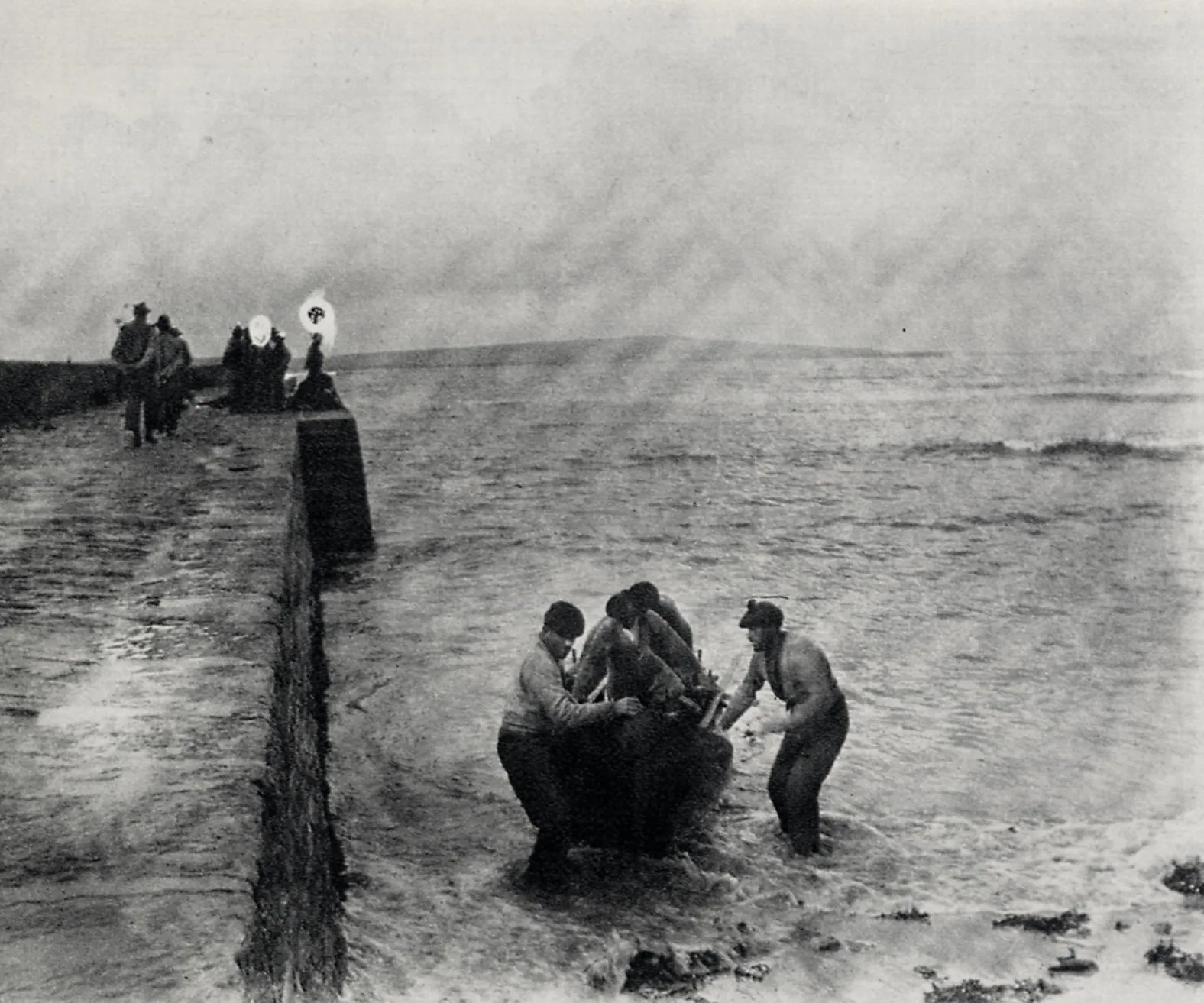

By the middle of the twentieth century, engines and timber boats had taken over most of the work, and the old boats and their builders grew rare. Since then there has been a revival. Hookers are built and sailed again, and every year boats race across Galway Bay from Connemara to Kinvara at the festival ofCruinniú na mBád, the gathering of the boats. Currach crews race on rivers and at sea, and community boatbuilding groups teach the craft to new hands.
A new programme
Get involved
Floating heritage is one of our newest programmes. If you build, sail or row traditional boats, or would like to learn, we’d love to hear from you.