The Asian hornet hunts honeybees. It arrived in Europe in 2004, has spread across much of the continent, and has now reached Ireland. Every sighting reported helps keep it from settling here.
It hovers outside a hive’s entrance, catches returning foragers in the air and carries them off to feed its own young. A colony under attack stops flying, runs short of food and can be badly weakened before winter. The hornet also eats wild bees, hoverflies and other pollinators, so the harm goes well beyond beekeeping.
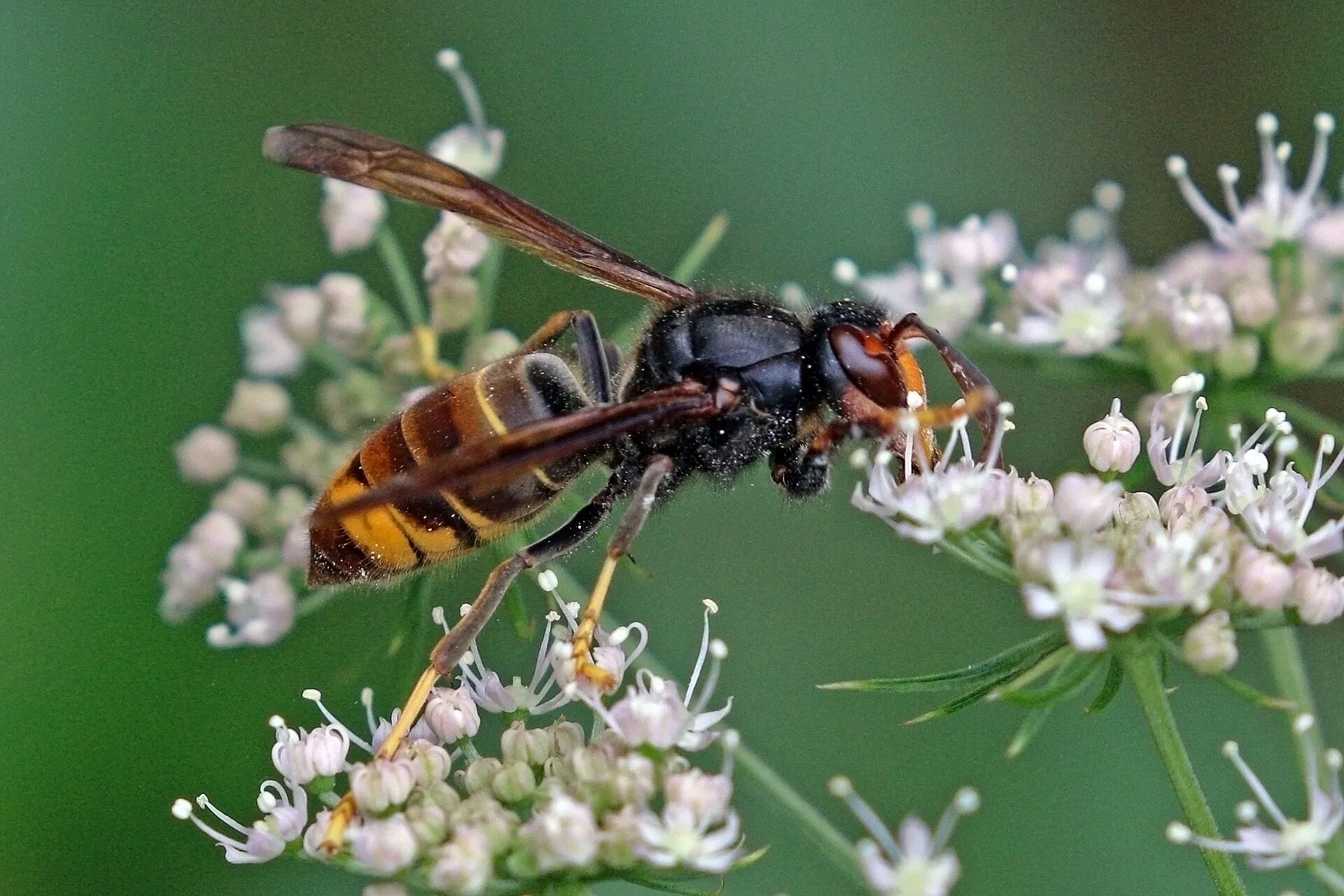

Identification
Is it an Asian hornet?
Size and colour are the quickest clues. The Asian hornet is darker than most people expect. Bars are drawn to scale.
- Report this one
Asian hornet
Vespa velutina
Abdomen
Size 25–30 mm
- Mostly dark: a black-brown body with one broad yellow-orange band near the tip
- Yellow ends to its legs, so it’s also called the yellow-legged hornet
- Orange face, dark head
- Hovers outside hive entrances, picking off bees
European hornet
Vespa crabro
Abdomen
Size 25–35 mm
- Mostly yellow abdomen, with brown markings
- Chestnut-red and brown head and thorax
- Brown legs
- Very rarely seen in Ireland
Common wasp
Vespula vulgaris
Abdomen
Size 12–17 mm
- Much smaller
- Bright yellow and black bands all the way down
- Yellow legs
- Familiar at picnics and bins from late summer
The hornet’s year
When to look, and what you might see
- Queens wake and build a small first nest, low down and sheltered: March to May
- The colony moves to a large second nest, often high in a tree: June to August
- Workers hunt honeybees at hive entrances: July to October, at its worst from August to October
- New queens and males leave the nest to mate: September to November
Solid red marks when attacks on hives are at their worst.
For beekeepers
Protecting your hives
Narrow the entrance
In late summer, reduce entrances so the guards can defend them. Mesh entrance guards that let bees through but not hornets help too.
Keep colonies strong
A big colony copes with hunting hornets far better than a small one. Combine weak colonies before autumn.
Watch, don’t trap blindly
Look out for hornets hovering at your hives. Don’t set home-made sweet traps: they kill many other insects. Follow official advice on monitoring.
Seen one?
Report a sighting
Take a photo if you safely can, note where and when you saw it, and report it on the National Biodiversity Data Centre’s invasive species site. Experts check every report.
Don’t go near a nest or try to destroy one yourself. The hornets defend it fiercely, and nests are removed by specialists.