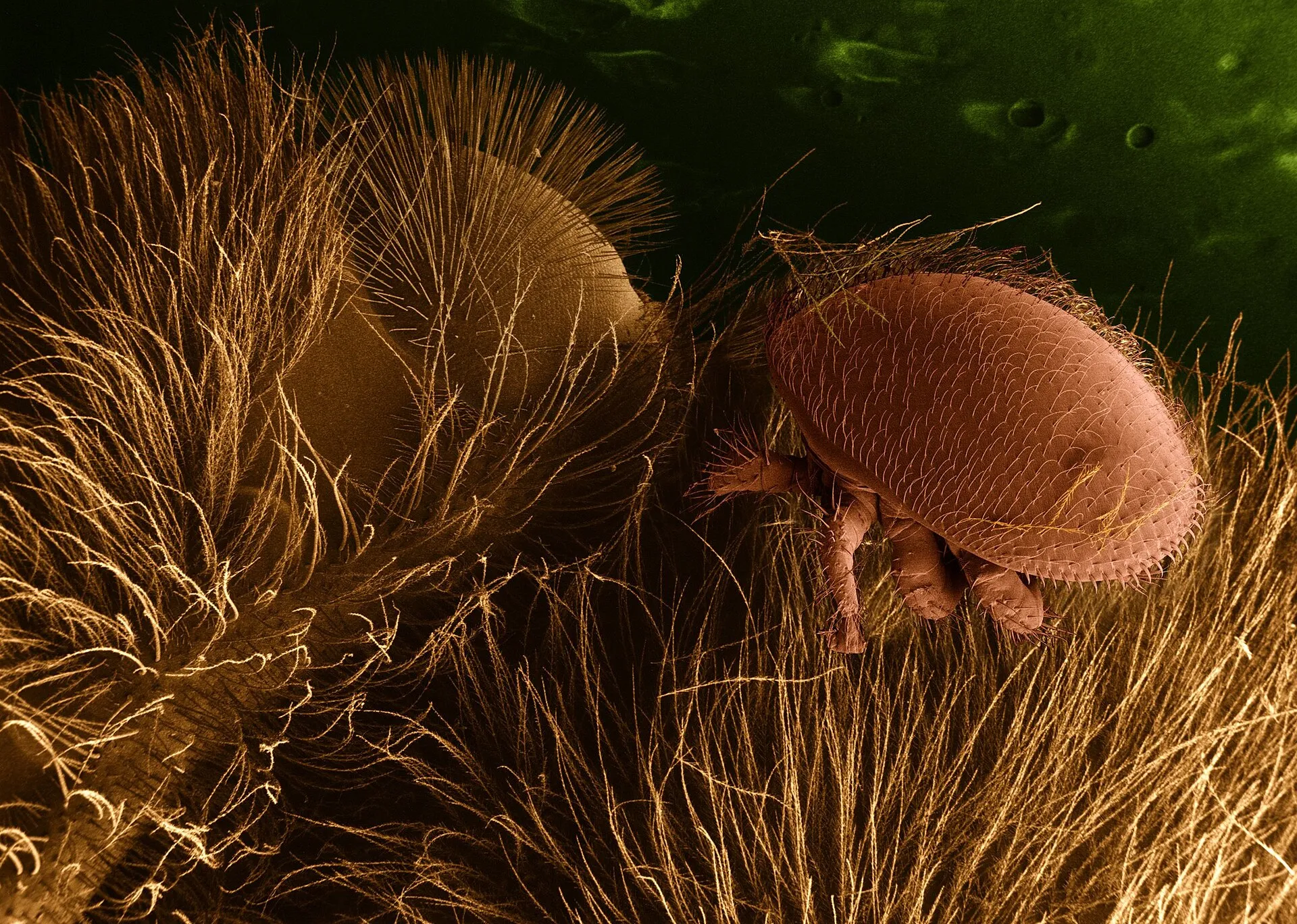
Varroa destructor is a mite the size of a pinhead, and the biggest problem facing honeybees in Ireland. It can’t be got rid of, but it can be kept down to numbers a colony can live with.
The female mite rides on adult bees, then slips into a brood cell just before it’s capped and raises her young on the developing bee. The bee that hatches is weaker and shorter-lived. Worse, the mites spread viruses as they feed, especially deformed wing virus, which leaves young bees with crumpled, useless wings. Mite numbers double every few weeks in summer, and a colony that looks strong in July can collapse by winter.

- 1998The year varroa was found in Ireland
- Everycolony in the country is now likely to carry it
- ~3 yearsHow long most untreated colonies survive
The varroa year
A year of keeping mites down
Good varroa control is several small things done at the right time of year, not one treatment. Beekeepers call it integrated pest management.
- Count mitesAll year, at least four times
- Treat while broodlessDecember to January
- Remove drone broodApril to June
- Treat after the honey harvestAugust to September
Winter is the best time to treat: with little or no brood in the hive, nearly every mite is out on the bees, where treatments reach it. In spring, mites prefer drone brood, so cutting out capped drone comb removes them with it.
Monitoring
Three ways to count your mites
Mite drop
Slide a sticky or greased board under an open-mesh floor for a week, then count the fallen mites and divide by seven.
- Effort
- Low
- Accuracy
- Low
Easy, and doesn’t disturb the bees, but only a rough guide.
Sugar roll
Shake about 300 bees from a brood frame into a jar of icing sugar, roll it for a minute, then shake the sugar out and count the mites.
- Effort
- Medium
- Accuracy
- Medium
Gives a percentage, and the bees go back to the hive alive.
Alcohol wash
The same, but with surgical spirit or washer fluid instead of sugar. The mites wash off and are easy to count.
- Effort
- Medium
- Accuracy
- High
The most accurate, but the sample of bees dies.
When to act
Mites per 100 bees, in summer
A rough guide, from a sugar roll or alcohol wash. Thresholds are lower in spring, when the colony is smaller. With a mite drop, the numbers are different: ask your local association or our course tutors for the figures to use.
Treating safely
Five rules for any varroa treatment
Use authorised medicines only
Use a varroa treatment authorised for honeybees in Ireland, from a pharmacy, vet or beekeeping supplier, and follow the label exactly.
Supers off first
Most treatments must never be used while honey for people is on the hive. Check the label for when the supers have to come off.
Treat the whole apiary together
Treat every colony in an apiary at the same time, or mites move straight back in from the untreated ones.
Change it up
Varroa has become resistant to some older treatments. Alternate between products with different active ingredients.
Write it down
Keep a record of each treatment: the product, its batch, the dates and the colonies treated, as for any food-producing animal.
Learn varroa control hands-on
Our Advanced practice course covers varroa, pests and disease in the apiary, with experienced beekeepers beside you.