Chalk brood is a fungal disease of honeybee larvae. It looks alarming the first time you see it, but it is one of the most common and least serious brood diseases, and a healthy colony usually deals with it on its own.
It’s caused by the fungus Ascosphaera apis. A larva eats the spores with its food, and the fungus grows through its body until it dies, just after its cell is capped. What’s left dries into a hard, chalky mummy. The spores last in the hive for years, so most colonies carry a little of the fungus. Whether it does any harm comes down to the weather, the hive and the bees.
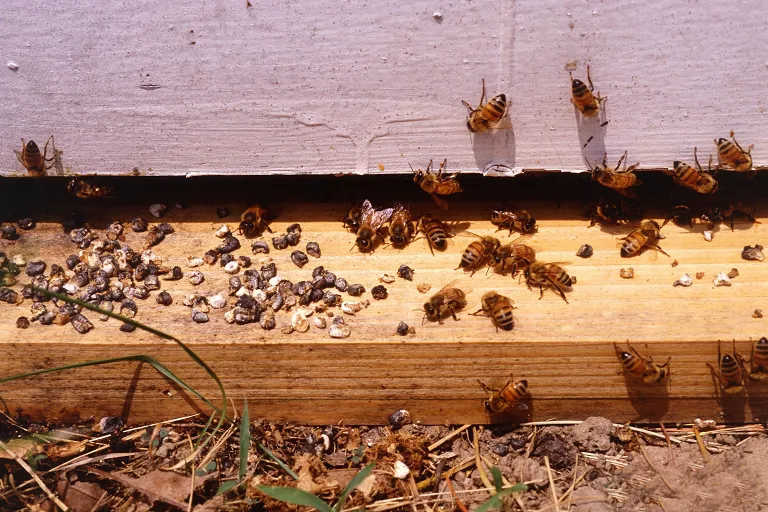

How to recognise it
Mummies, from white to black
Chalk white
Freshly dead larvae, hard and dry, filling the cell like a stick of chalk.
Mottled grey
The fungus starts to form its spores, and dark patches spread over the surface.
Black
Covered in ripe spores. These are the mummies that spread the disease.
Where to look: in open and uncapped cells in the brood nest, loose enough to rattle when you shake the frame gently; on the hive floor; and at the entrance, where the bees drop them as they clean house.
Why it takes hold
Four causes, four fixes
Chilled brood
The fungus does best when brood cools a little. Spring, when the colony is small and the nights are cold, is when it shows most.
What to do
Don’t give a colony more room than its bees can keep warm. Keep inspections short on cold days.
Damp
A hive that stays wet inside, in a shaded hollow or under dripping trees, gives the fungus an easy start.
What to do
Site hives somewhere sunny, sheltered and off the ground, with a little ventilation and a roof that doesn’t leak.
A stressed colony
Colonies that are weak, hungry or carrying a heavy varroa load clean out dead brood more slowly.
What to do
Keep colonies strong and well fed, and keep varroa under control.
The queen’s line
Some colonies are much better than others at finding and removing sick brood. This “hygienic” behaviour runs in families.
What to do
If a colony has chalk brood badly year after year, replace its queen with one from a hygienic, local line.
Common questions
Chalk brood, answered
Is chalk brood dangerous to my colony?
Usually not. Most colonies have a little in spring and clear it themselves as the weather warms and the colony grows. It becomes a problem only when a large share of the brood is lost, which holds the colony back for the season.
Do I need to report it?
No. Chalk brood isn’t a notifiable disease in Ireland. It’s still worth noting in your hive records, so you can see whether it’s getting worse over time.
Is there a treatment?
There’s no approved medicine for chalk brood, and none is needed. Managing the conditions that let it take hold, and requeening if it keeps coming back, is the cure.
Can I still take honey from a colony with chalk brood?
Yes. It affects brood, not honey, and it doesn’t harm people.
What should I do with the mummies?
The bees carry them out themselves, which is why you see them on the floor and at the entrance. Clean the floor and entrance, and replace old, mummy-filled comb with fresh foundation as part of your normal comb changes.
Could it be something more serious?
Chalk brood mummies are white to black, hard and dry, and lie loose in the cell. If you see brown, melted or sticky remains, sunken cappings, or twisted larvae, look at our foul brood pages and report it. See European foul brood and American foul brood.