A triskele is three spirals turning out from one centre. It is one of the oldest designs made by people in Ireland, and it has never really gone away.
The name comes from the Greek triskelēs, “three-legged”, but the idea is far older than Greece. We chose it for our logo because it says, in one shape, what we care about: things that keep turning, season after season, and three strands of work wound around a single purpose.
Brú na Bóinne, Co. Meath
Carved before the pyramids
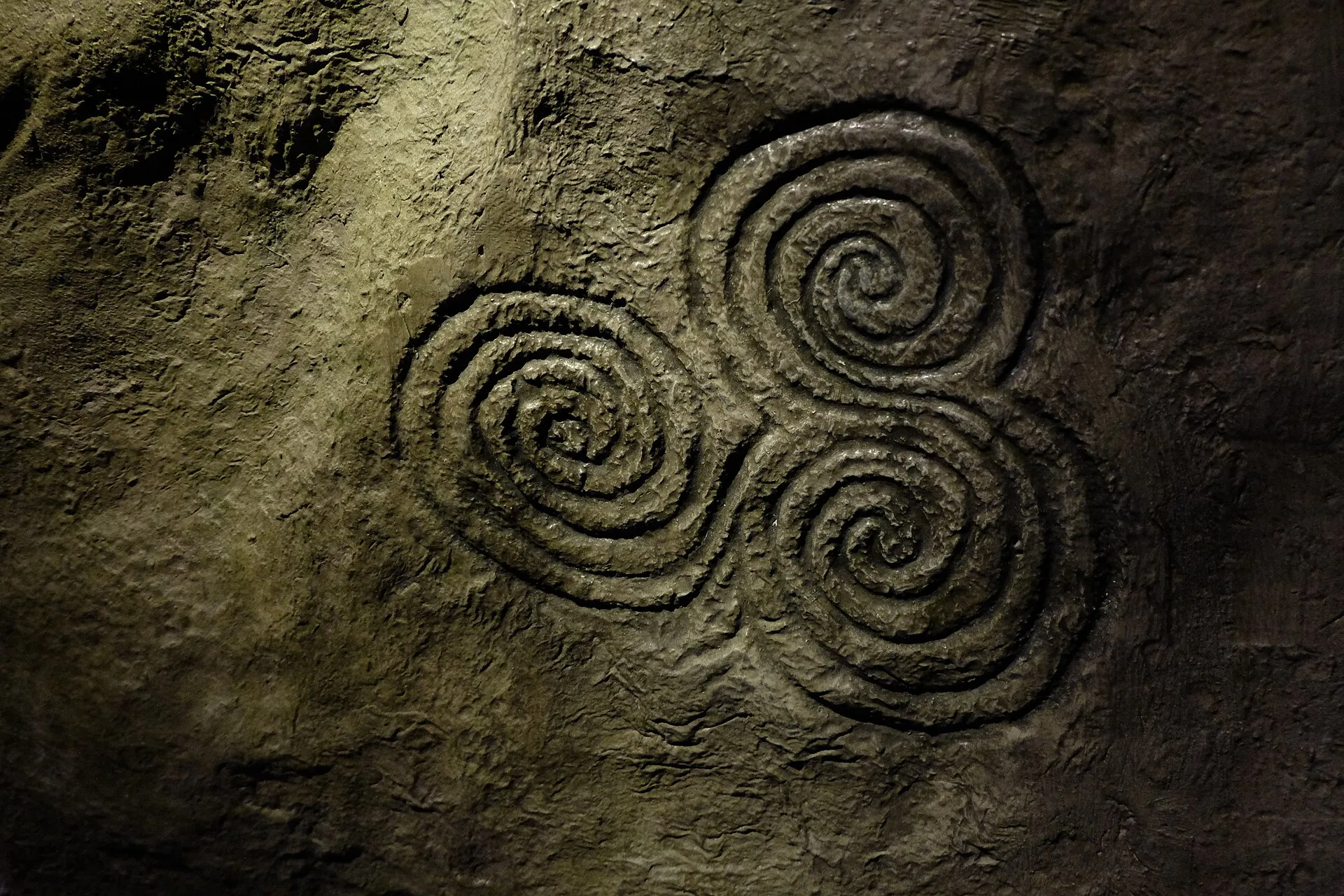

Newgrange was built around 3200 BCE, about six centuries before the Great Pyramid at Giza. It is a huge mound of earth and stone with a long passage leading to a cross-shaped chamber, and its builders covered its stones with carvings: zigzags, lozenges, circles and spirals.
Deep in the chamber, on a stone at the back of one recess, is the triple spiral. Each midwinter, for a few days around the solstice, the rising sun shines through a box above the entrance and lights the passage and chamber floor for about seventeen minutes. Whatever the spirals meant to the people who carved them, they put them where the year turns.
Strictly, the Newgrange design is a triple spiral, drawn freehand; the neat, evenly turned triskele came later, in Celtic art. Both carry the same idea.
- Built
- c. 3200 BCE
- Age
- 5,200 years
- Solstice light
- 17 minutes
- World Heritage Site
- Since 1993
Five thousand years
A symbol that kept turning
- c. 3200 BCE
Newgrange
Farmers in the Boyne Valley build a great passage tomb and carve a triple spiral on a stone deep inside its chamber.
- From c. 300 BCE
Celtic metalwork
Iron Age smiths work flowing three-part whirls into bronze: horse gear, brooches and the bowls and discs found in Irish bogs.
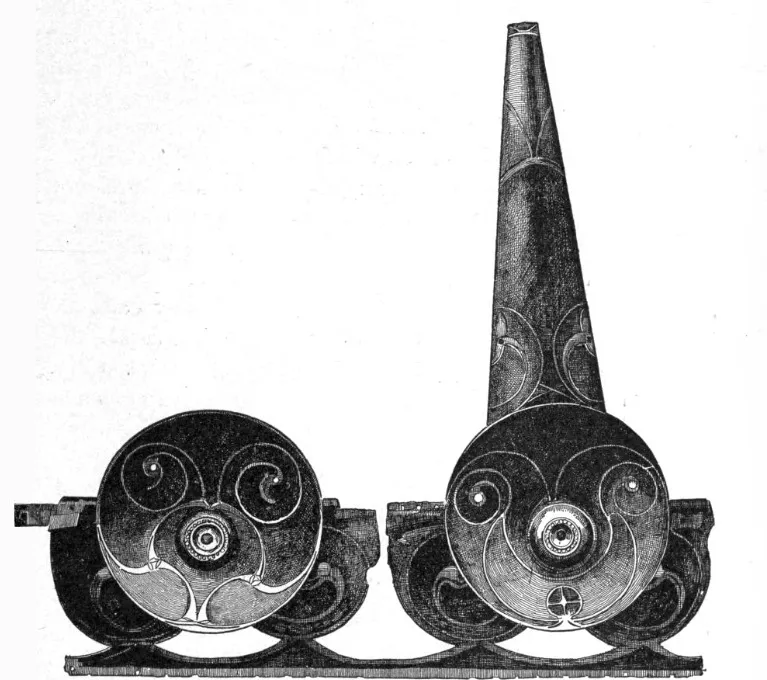
The bronze Petrie Crown, in a 1915 engraving.Photo: E. A. Parkyn, Public domain - c. 800 CE
The Book of Kells
Monks fill the pages of the great gospel book with spirals and triskeles, packed so finely they reward a magnifying glass.
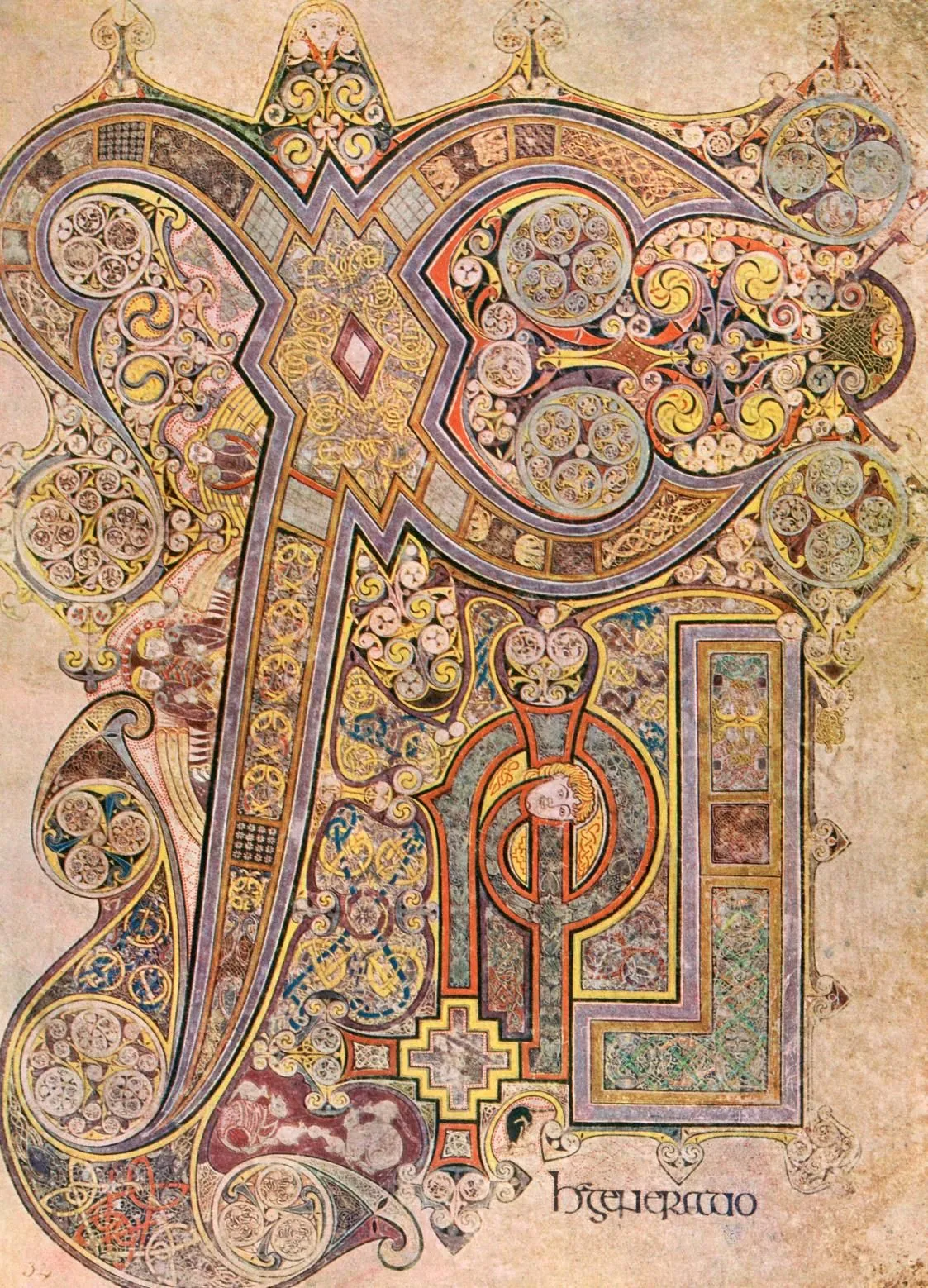
The Chi Rho page, Book of Kells.Photo: Wikimedia Commons, Public domain - Today
Our logo
Three spirals hold a native black bee at their centre: our work, and the bee we protect, drawn in a symbol older than writing here.


Our three strands
Three spirals, one purpose
People have read many threes into the triskele: land, sea and sky; past, present and future; birth, life and renewal. For us, the three spirals are the three strands of our work, each turning around the same centre.
Conservation
Protecting the Irish Black Bee, a bee shaped by this island’s weather over thousands of years, so it keeps its place in our fields and hedgerows.
Education
Training beekeepers properly, from a first season to recognised qualifications, because good conservation starts with knowledge.
Traditional skills
Keeping alive the crafts that grew up beside the hive: skeps, baskets, candles, mead and the rest, passed from hand to hand.
In our logo
The bee at the centre
Our logo sets a native black bee where the three spirals meet. Two spirals are gold, for honey and the crafts of the hive, and one is green, for the land the bee depends on. The ring that joins them is the community that holds the work together: beekeepers, learners and everyone who supports them.
Meet the people behind it